
Wisary for AI-First Development
Prototypes explore. Specs ship.
AI tools execute your words literally. Wisary turns what's in your head into a complete, reviewed, quality-checked spec, so your team and your AI build the right thing the first time.
Your spec is now the interface to execution
When engineers hand work to AI coding tools, the spec stops being a reference document and becomes the instruction set. The AI doesn't attend your standups, doesn't know your constraints, and doesn't push back on a fuzzy requirement. It builds exactly what the words say.
The industry is learning this the hard way. After analyzing more than 2,500 agent instruction files from public repositories, GitHub put the problem plainly: “Most agent files fail because they’re too vague.” Vague in, vague out. The rework that a vague PRD used to cause over a sprint now ships as the wrong product at AI speed.
The quality gate before work goes to an AI workflow
Wisary is built around the discipline that AI-first development demands, and it applies that discipline before anything gets built:
- Ask: guided questions interview you for the context only your team has: goals, constraints, edge cases, and the decisions hiding in your head.
- Refine: every AI suggestion appears as a reviewable diff you approve or reject, so the spec stays yours.
- Check: Insights measures the document against quality metrics and links every unresolved gap to its exact section. You know it's build-ready before anyone, human or AI, builds from it.


From AI exploration to AI execution
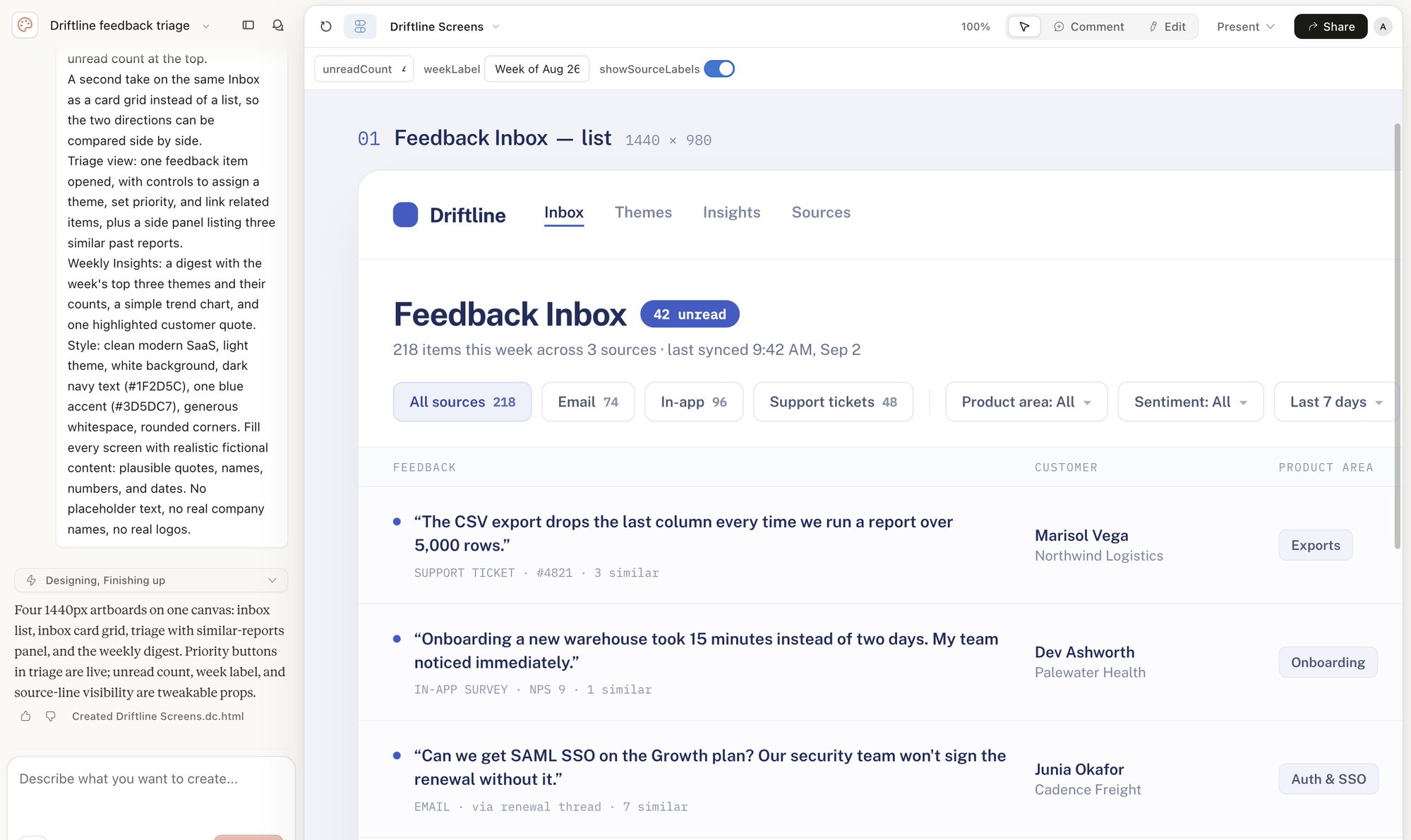
The spec is not the first place AI touches your product. The idea was explored in a Claude or ChatGPT conversation, or shaped visually in Claude Design, long before anything was written down. Wisary carries that exploration forward instead of asking you to start over.
That makes Wisary the bridge between the two AI phases of building: the exploration that happens in chat and design tools, and the execution that happens in coding tools. Context flows in from the AI where you think; a complete, reviewed, quality-checked spec flows out to the AI that builds.
1. Explore in ChatGPT, Claude, or Claude Design
Ideas rarely start in a spec tool. Talk through the problem with your AI, or shape the experience visually in Claude Design, until you know what the product should be.
2. Import the learnings into Wisary
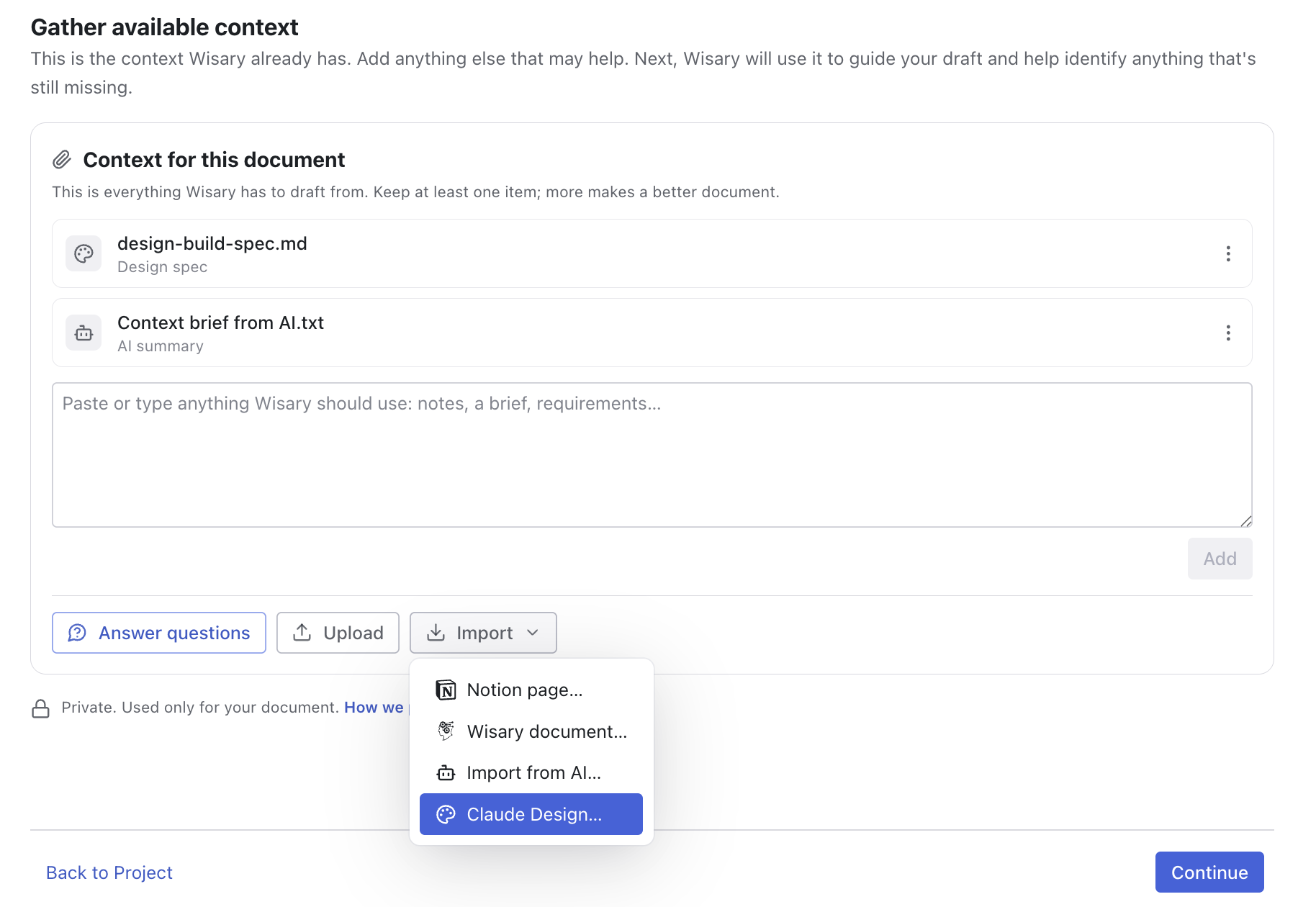
Import from AI generates an extraction prompt you run in your conversation, and the summary comes back as a context file. From Claude Design, upload the build spec it writes for your design. Nothing you learned gets retyped or lost.
3. Close the gaps
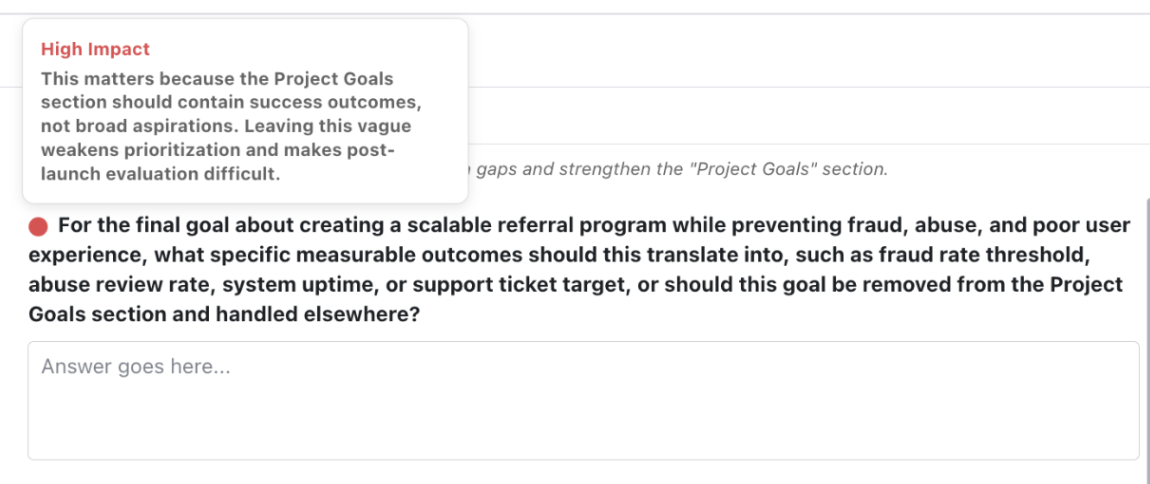
Wisary interviews you with guided questions matched to your template, surfacing the edge cases, constraints, and decisions the exploration skipped. Every AI suggestion lands as a reviewable diff you approve, and Insights checks the document until it is build-ready.
4. Generate the requirements
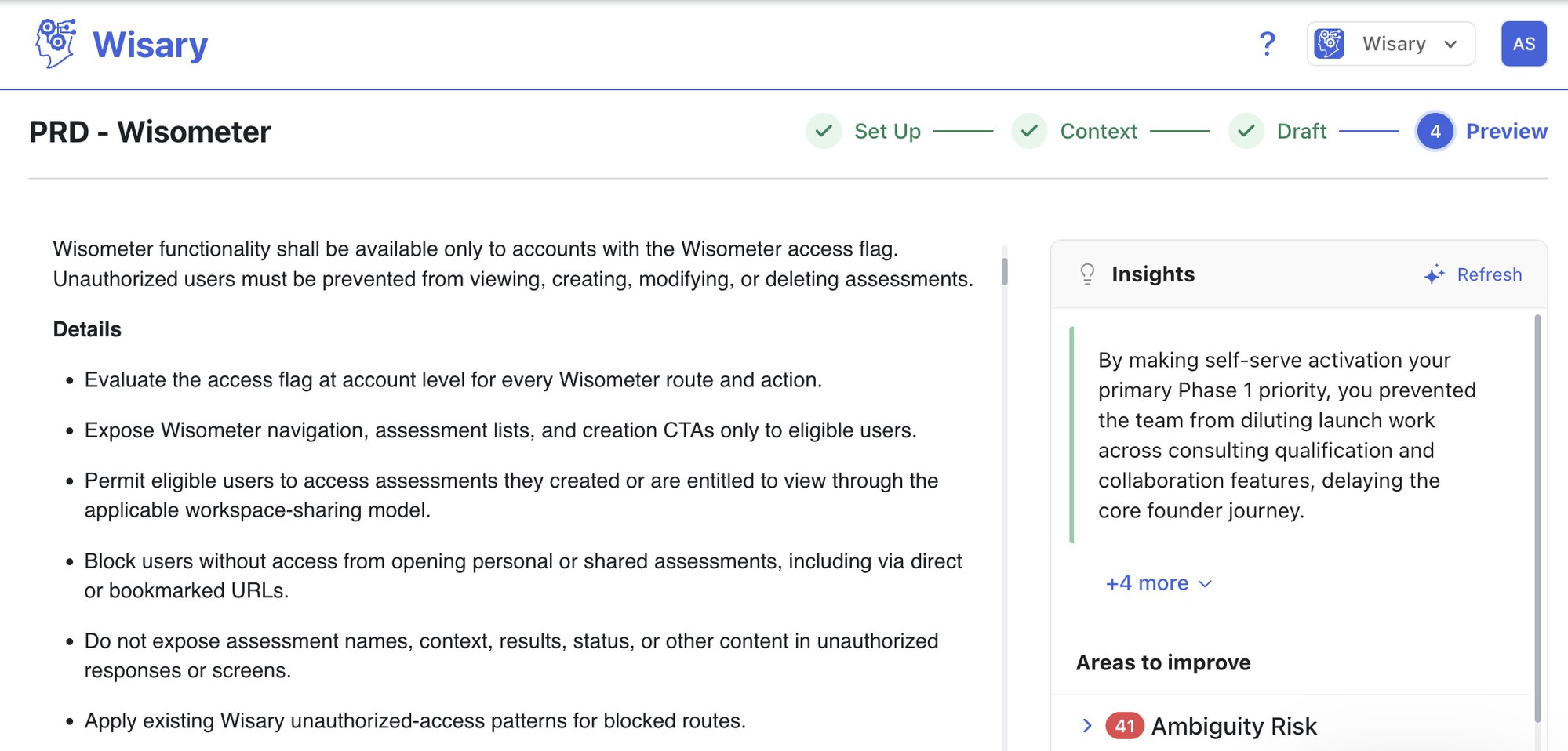
The result is a complete product requirements document: structured sections, requirements, and acceptance criteria your whole team can stand behind.
5. Hand it off to an engineer or a coding AI
An engineer gets the document, published to Confluence or Notion. A coding AI such as Claude Code gets the same spec as a clean Markdown file, downloaded or pasted with Copy Document.
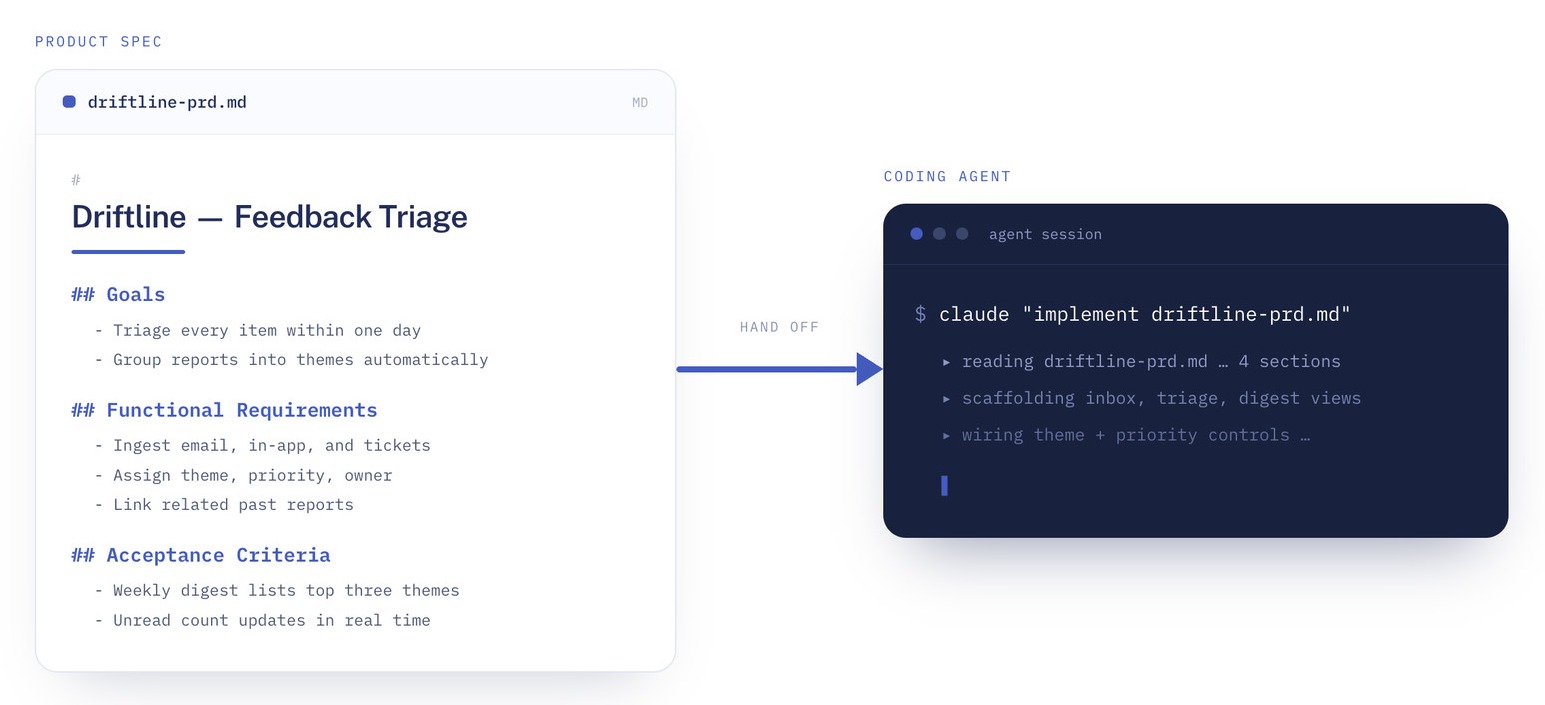
Agent-ready output, wherever you build
A finished Wisary document exports as clean, structured Markdown that drops straight into the tools where AI builds, such as Claude Code, and Copy Document carries it anywhere else. Custom templates let your organization encode its own spec standard, so every document your team hands to an AI workflow has the same shape and the same completeness.
The humans stay covered too: the same spec publishes to Confluence or Notion, chains into user journeys, tech plans, and test plans, and remains the durable source of truth while code becomes cheap to regenerate.
Prototypes explore. Specs ship.
AI prototyping is a superpower for exploring ideas, and a liability for defining products. Wisary bookends it: before you prototype, it captures goals, constraints, and user needs in a structured format that gives AI tools the context to generate something realistic. After the prototype teaches you what works, Wisary turns those learnings into a production spec, so what gets built matches what was validated.
The prototype gets thrown away. The spec is what ships.
Prototypes explore. Specs ship. A prototype shows one happy path; it can't say who the product is for, what's out of scope, what happens when things fail, or how you'll know it worked. Those decisions are the product, and they live in the spec.
AI agents follow your words literally, so the quality of the spec now determines the quality of the build: a vague spec ships the wrong product at AI speed. Wisary turns what the prototype taught you into a challenged, refined, and checked spec, then hands it to your team and your AI to build right the first time.